
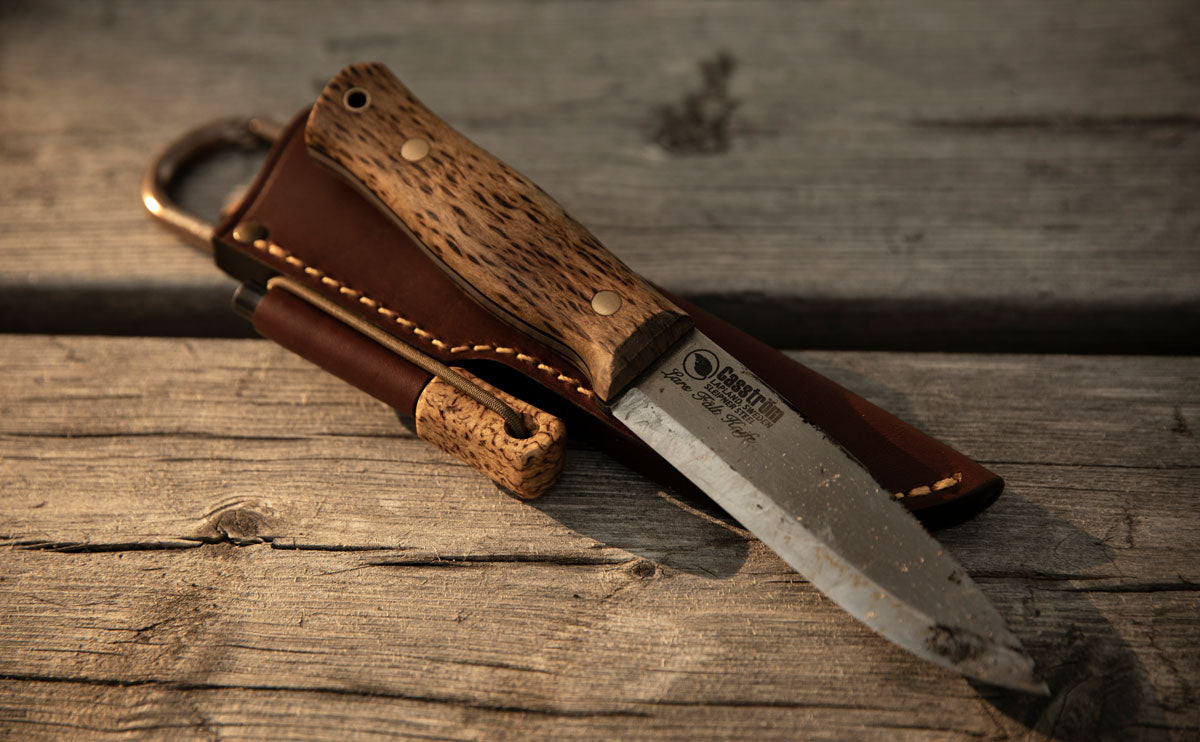
If you own a carbon steel knife, and you are using it regularly, you will notice that the steel doesn’t stay looking exactly as it did when it was all shiny and new.
Perhaps that bright steel is turning a soft grey. Maybe there are dark patches on the blade, hints of blue, or brown. It starts with subtle changes but over time, the blade takes on a character all of its own.
This is what we call patina.

What is patina?
Patina is a thin layer of oxidation that develops on the surface of carbon steel as it reacts with its surroundings.
Carbon steel is more reactive than stainless steel. When the steel comes into contact with oxygen, moisture and the acids naturally found in food, its surface gradually changes. Rather than remaining bright and polished, it develops a layer of oxides that can alter both the colour and appearance of the blade.
Depending on how the knife is used and cared for, patina can range from pale grey and golden tones to blue, purple, brown and deep charcoal or black.
Every knife develops differently.
Patina is a natural part of owning and using a carbon steel knife. It is not something to be feared or scrubbed away. In fact, for many knife owners, watching a patina develop is one of the pleasures of using carbon steel.
Can you force a patina?
Absolutely.
Although patina will develop naturally with use, some people choose to accelerate the process. This is often called “forcing a patina”.
There are several ways of doing this. Common household ingredients such as mustard, vinegar, lemon juice or coffee can be used because their acidity encourages oxidation of the exposed steel.
The method you choose can influence the appearance. For example, applying an acidic substance in a pattern can create a deliberately mottled finish, while covering the blade more evenly can produce a more consistent patina.
For some knife owners, this is simply a practical way of getting the blade through its initial reactive stage. For others, it's a creative process.

Does patina protect the knife?
This is where things can get a little more complicated.
A stable patina can provide a degree of protection by creating a layer between the underlying steel and the environment. Once a patina has formed, the steel can become less reactive to everyday exposure than freshly polished carbon steel.
But patina isn't a protective coating in the same way as paint, plating or a dedicated corrosion-resistant finish.
It does not mean that you can leave a carbon steel knife wet or neglect it.
Good care is still important.
Think of patina as part of the steel's natural evolution—not as a substitute for caring for the knife.
Patina or rust?
This is perhaps the most important distinction to understand.
Patina and rust are both forms of oxidation, but they are not the same thing.
A healthy, stable patina is generally thin and firmly attached to the surface of the steel. It may appear grey, blue, brown, purple or black, and usually has a relatively smooth appearance.
Rust, on the other hand, is active corrosion. It is commonly orange or reddish in colour and can appear rough, powdery, flaky or raised from the surface.
A simple way to think about it is:
Patina is character. Rust is corrosion.
If you see orange or red rust developing, it is worth dealing with it rather than simply allowing it to remain. Depending on how advanced it is, light rust can often be removed with gentle cleaning or an appropriate rust-removal method before the blade is cleaned, dried and protected again.
The good news is that a little surface rust doesn't necessarily mean your knife is ruined. Carbon steel is designed to be maintained, and with proper care it can give you many years of service.

Should you remove patina?
If the patina is stable and you like the way it looks, there is no reason to remove it.
Some people prefer the bright appearance of freshly polished steel and will periodically clean their blades back. Others actively encourage a darker patina and enjoy watching it develop.
Neither approach is wrong.
A knife with a history
Perhaps the best thing about patina is that it tells a story.
A brand-new carbon steel knife is a blank canvas. It has the appearance it left the workshop with, but nothing yet marks its journey.
You cut your first meal with it. You take it into the woods. You prepare food around a campfire. You sharpen it. You wash it. You oil it. You use it again.
Slowly, almost imperceptibly, the steel changes.
The colour becomes deeper. Small marks appear. The blade develops its own particular pattern.
That's what makes patina so appealing to many carbon steel enthusiasts. It is not a defect. It is evidence of ownership and use.

Embrace the change
Carbon steel asks a little more from you than stainless steel does.
It asks you to dry the blade. It asks you not to leave it soaking in the sink. It benefits from a little oil when it is being stored. And, in return, it gives you a blade that can develop a character entirely its own.
So if your new carbon steel knife starts to change colour, don't panic.
Watch it.
Let the grey develop. See how different foods affect the blade. Notice the colours and patterns that appear over time.
Just remember the simple rule:
Patina is part of the journey. Rust is something to manage.
With a little care, your carbon steel knife won't simply remain a tool. It will become your knife—shaped by every meal, camp, hunt, expedition and adventure it has been part of.
And that, perhaps, is the real beauty of patina.
0 comments